
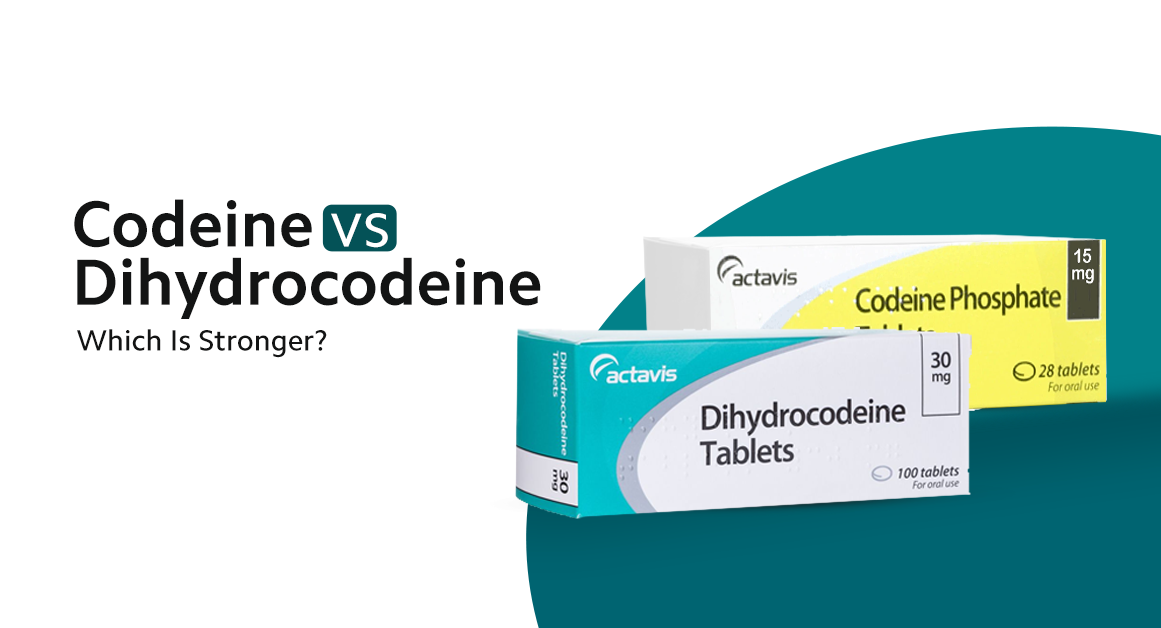
Codeine vs Dihydrocodeine – which is stronger? It seems like a long debate that never comes to an end. Overall, both are somehow close to each other however DHC feels stronger as it offers a better reaction in general.
Are you looking for a stronger painkiller because codeine isn’t doing enough? Then you have probably wondered whether dihydrocodeine is the better choice. In the dihydrocodeine vs codeine debate, DHC is often called the obvious winner. The real answer is more interesting, and it depends on how your body handles each drug.
Dihydrocodeine vs Codeine: How Are They Related?
We have known codeine as a strong painkiller for a long time. The NHS lists it for pain after an operation or injury, and for some coughs and diarrhoea. Dihydrocodeine is based on codeine but has one small change in its chemical structure. The double bond at the 7,8 position of the molecule is saturated. That is where the “dihydro” in its name comes from. Knowing the potency, DHC is used for pain such as cancer pain when other painkillers have not worked.
Is Dihydrocodeine the Same as Codeine?
No. They are close relatives, but each has its own doses, tablet strengths and leaflet warnings. Never swap one for the other unless your prescriber tells you to.
Is Dihydrocodeine Stronger Than Codeine?
On paper, only slightly, if at all. Many people believe DHC is two or three times stronger, but UK guidance does not back that up. The Faculty of Pain Medicine’s Opioids Aware table follows BNF figures and gives both drugs the same potency. Each is rated at 0.1 compared with oral morphine. In plain terms, around 100mg of either is roughly equal to 10mg of oral morphine. The dihydrocodeine leaflet places its strength “between morphine and codeine”.
So Why Does DHC Feel Stronger?
There are real reasons behind its reputation:
- Codeine needs your liver: An enzyme called CYP2D6 turns codeine into morphine, and that morphine does the work. People with low CYP2D6 activity get weak relief.
- The opposite problem: Ultra-rapid metabolisers make morphine too fast, so codeine can cause toxicity even at normal doses.
- Bigger tablets: DHC prolonged-release comes in 60mg, 90mg and 120mg for severe, long-term pain.
- Longer cover: Prolonged-release DHC is taken every 12 hours and keeps working through that gap.
Dihydrocodeine 30mg vs Codeine
Put a 30mg tablet of each side by side and you are looking at much the same strength. Which one suits you depends on your pain, your other medicines and how you got on with codeine before. That choice belongs to your prescriber, and the dose on your label is the one to follow. For more on this strength, read Everything You Need to Know About Dihydrocodeine 30mg

Difference Between Codeine and Dihydrocodeine at a Glance
Here is the codeine phosphate vs dihydrocodeine comparison in one place.
| Details | Codeine Phosphate | Dihydrocodeine |
| Drug type | Opioid painkiller | Semi-synthetic opioid painkiller |
| UK legal status | Class B, Schedule 5 tablets, prescription-only | Class B, Schedule 5 tablets, prescription-only |
| Strengths at Direct Online Pills | 15mg, 30mg, 60mg tablets | 30mg tablets; 60mg, 90mg, 120mg prolonged-release |
| Adult dosing | Up to 4 times a day, at least 6 hours apart | Prolonged-release: 1 or 2 tablets every 12 hours |
| Maximum daily dose | 240mg | As prescribed; check your leaflet |
| How long it lasts | Half-life about 3 to 4 hours | Prolonged-release covers 12 hours |
| Potency vs oral morphine | 0.1 | 0.1 |
| Common side effects | Constipation, nausea, sleepiness, sweating | Constipation, nausea, drowsiness, dry mouth, headaches |
One more point from the codeine leaflet: treatment of acute pain should be limited to 3 days. If the pain is still there after that, see a doctor.
How to Take Codeine and Dihydrocodeine Safely
It’s not good practice to take either one casually. Dihydrocodeine vs codeine phosphate side effects overlap a lot, and so do the precautions. Here are a few things to keep in mind:
- Swallow the tablets whole with a glass of plain water, with or without food.
- Do not drive or operate machinery if you feel drowsy, as it can lead to accidents.
- Avoid alcohol, sleeping tablets, benzodiazepines such as diazepam and other opioid painkillers.
- Use it only for as long as your doctor advises, as longer use raises the risk of dependence.
- Never stop suddenly after long use. Your doctor will lower the dose gradually.
Common Side Effects
Both can cause constipation, feeling or being sick, and drowsiness. Codeine may also make you sweat, while DHC can bring a dry mouth or headaches. Call 999 or go to A&E if your throat swells, a severe rash appears or you struggle to breathe. See the full list in Dihydrocodeine Side Effects.
Who Should Be Careful?
Speak to your GP or pharmacist before starting either one if you:
- Have liver, kidney or breathing problems such as asthma or COPD
- Have a head injury or an underactive thyroid
- Have ever had an addiction to alcohol, medicines or drugs
- Are pregnant or breastfeeding
Codeine is not suitable for children under 12 or for known CYP2D6 ultra-rapid metabolisers. In pregnancy, the NHS says both may be used if needed, once your doctor has weighed up the risks. Paracetamol is often the safer option to ask about first. Neither drug is usually used while breastfeeding. Check if you can take Dihydrocodeine with paracetamol or codeine with paracetamol.
Buy Codeine and Dihydrocodeine Online
You can count on Direct Online Pills, where your medicines are delivered overnight to your doorstep. Specialising in painkillers, sleeping pills and anti-anxiety medicines, we supply 100% original products in discreet packaging. You can also get a discount when you pay with Bitcoin.
Shop codeine phosphate in 15mg, 30mg and 60mg strengths. Our dihydrocodeine range includes DHC 30mg and Dihydrocodeine Continus 60mg.
FAQs
No. The NHS lists other opioids, including codeine, as medicines that don’t mix well with dihydrocodeine. Taking both raises the risk of heavy drowsiness and slowed breathing.
Only slightly, if at all. UK dose tables rate both at 0.1 of oral morphine, but DHC is sold in higher prolonged-release strengths.
Yes. Both can lead to dependence and addiction, mainly with long-term use. Read Is Codeine Addictive? to learn how to use it safely.